




The API Server – The Front Door of Kubernetes

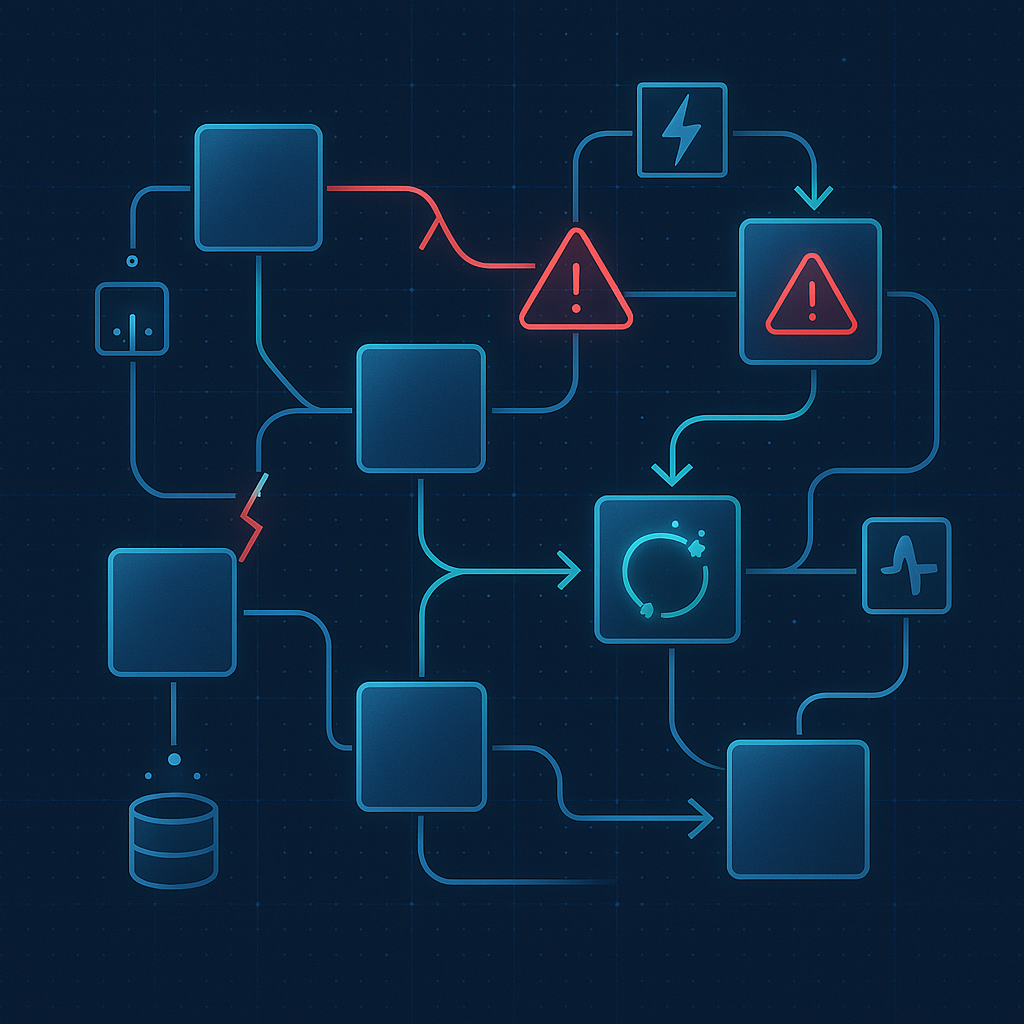
Imagine arriving at a large international airport. Regardless of whether you're a passenger, an airline employee, airport staff, or a delivery partner, everyone enters through a controlled checkpoint. Your identity is verified, your permissions are checked, and only then are you allowed to proceed. The Kubernetes API Server plays a very similar role. It is the single entry point to…
Part 4 – From kubectl apply to a Running Spring Boot Application

What Really Happens Behind the Scenes? "The most powerful thing about Kubernetes isn't that it runs containers. It's that it continuously works to make reality match your desired state." Friday Evening Deployment It is Friday evening. Sarah, a Senior Java Developer at Global Trust Bank, has just completed a new feature for the Payment Service. Over the past two weeks,…

Building Self-Healing Java Microservices with Kubernetes, OpenShift & Service Mesh

The Complete Learning Roadmap Modern enterprise applications are no longer just Spring Boot applications running on a server. They are distributed systems deployed across Kubernetes clusters, communicating through REST APIs and event-driven messaging, continuously monitored, automatically scaled, and deployed through sophisticated CI/CD pipelines. While there are thousands of articles explaining Kubernetes, Docker, Spring Boot, or CI/CD individually, very few connect…

Part 3 – Kubernetes Workloads and Infrastructure Sizing for Java Microservices

"The first time I deployed a Spring Boot application to Kubernetes, the platform team didn't ask for my JAR file. Instead, they asked me a dozen questions that I had never considered before." Introduction If you've spent most of your career building Java applications, your deployment experience probably looked something like this. Build the JAR Copy it to a server…

Part 2 – Understanding Kubernetes Architecture

"Before Kubernetes can heal your application, it must first understand what your application should look like." Introduction In the previous article, we discussed why failures are inevitable in distributed systems and why modern applications must be designed to recover automatically. But this raises an important question. How does Kubernetes know that something has failed? If a pod crashes... Who detects…

Part 1 – Why Self-Healing Matters in Modern Microservices

"The question isn't whether your microservice will fail. The only question is when—and whether your users will notice." Introduction Imagine this scenario. A customer opens a banking application to transfer money. The API Gateway receives the request. The Payment Service validates the transaction. The Account Service debits the sender's account. Before the credit operation completes... The Kubernetes Pod crashes. What…

Part 0 – The Complete Architecture Guide

Series: Building Enterprise-Grade Self-Healing Java Microservices "Every distributed system eventually fails. The difference between a good system and a great system is not whether failures occur—but whether users ever notice them." Welcome Over the last decade, software development has undergone a massive transformation. We have moved from deploying monolithic applications on dedicated servers to running hundreds of containerized microservices across…

Introduction: Building Self-Healing Java Microservices on Kubernetes, OpenShift & Service Mesh

A Complete Enterprise Learning Series for Spring Boot Developers "Writing microservices that work is easy. Writing microservices that continue working when everything around them fails is engineering." Introduction Modern enterprise applications no longer run on a single application server. They execute as hundreds of containerized microservices distributed across Kubernetes clusters, often spanning multiple availability zones and cloud providers. While Kubernetes…

Building Self-Healing Java Microservices on Kubernetes, OpenShift & Service Mesh

A Complete Enterprise Learning Series for Spring Boot Developers "Writing microservices that work is easy. Writing microservices that continue working when everything around them fails is engineering." Introduction Modern enterprise applications no longer run on a single application server. They execute as hundreds of containerized microservices distributed across Kubernetes clusters, often spanning multiple availability zones and cloud providers. While Kubernetes…